


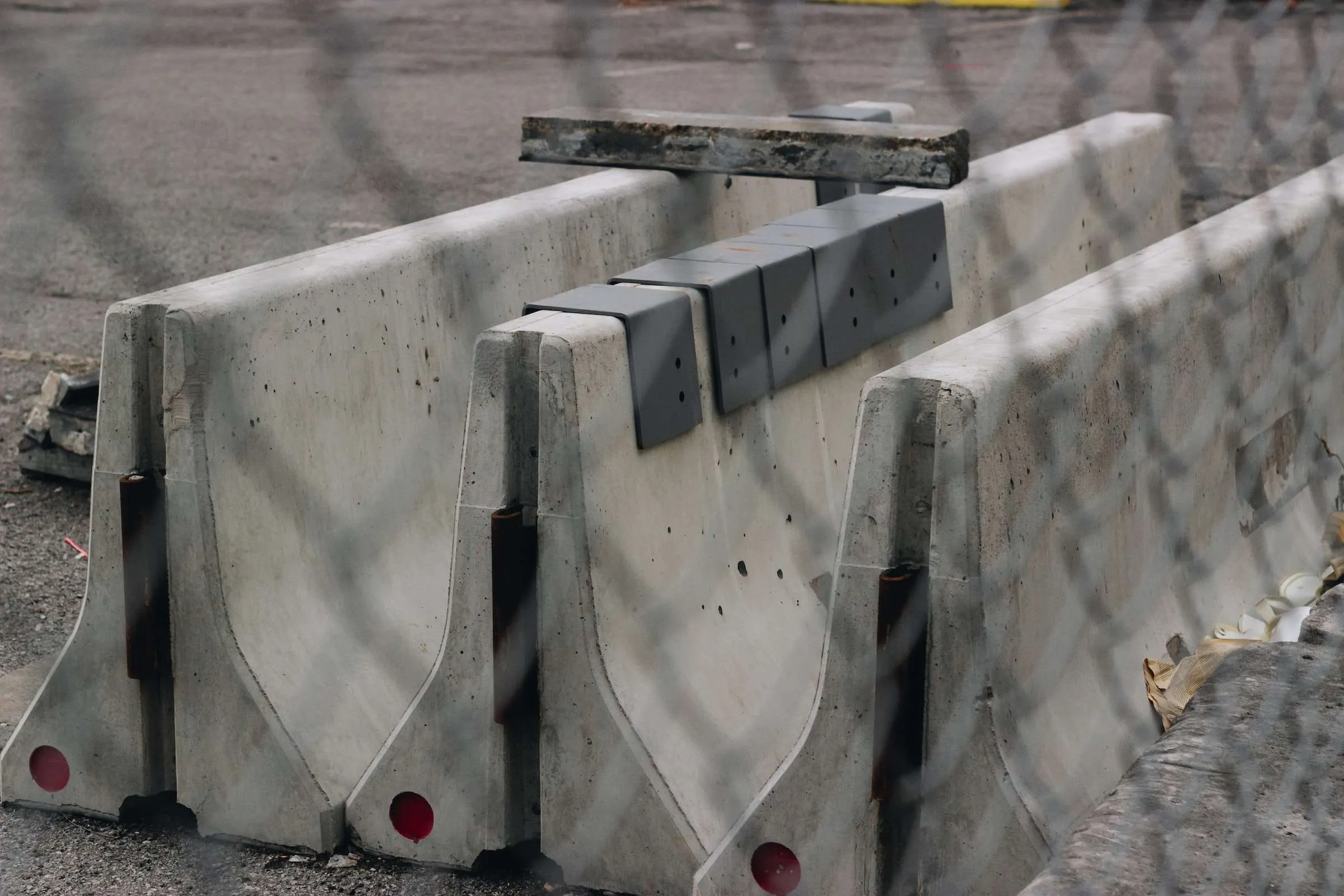
When it comes to protecting public infrastructure, there is no room for error. Municipalities and state departments of transportation rely on the consistency of safety hardware to maintain order on the roads. The specific jersey barrier dimensions used in modern roadwork are the result of decades of crash-test research aimed at reducing fatalities and protecting road crews. A standard 8-foot concrete barrier provides the necessary mass to stop a moving vehicle, while its specific height and width ensure that it remains a visible and formidable obstacle in all weather conditions. For city planners, these dimensions are the blueprint for a safe and functional urban environment.
Strategic Placement and Footprint
One of the most overlooked aspects of barrier logistics is the “footprint”—the actual ground space the barrier occupies. A standard Type 1 barrier typically features a base width of approximately two feet. This width is essential for a low center of gravity, which prevents the barrier from tipping during a collision. When security and logistics companies plan detours or temporary sidewalk closures, they must account for this width to ensure that ADA-compliant pathways remain open for pedestrians while still providing a robust shield for workers.
The interlocking “J-hook” or “pin-and-loop” systems found on these barriers allow them to act as a single unit. By connecting several 8-foot sections, agencies can create a rigid wall that distributes the force of an impact across multiple blocks, significantly increasing the safety rating of the entire perimeter.
Material Durability and Longevity
Unlike temporary plastic solutions, concrete barriers are built for permanent or semi-permanent installation. They are cast from high-strength reinforced concrete, making them resistant to fire, extreme cold, and chemical spills. For logistics companies managing long-term development projects, this durability translates to lower costs over time. Once placed, these barriers require virtually no maintenance, allowing the crew to focus entirely on the project at hand.
Multi-Industry Applications
The demand for heavy-duty concrete barriers has expanded into several specialized niches:
- Industrial Sites: Protecting fuel tanks, electrical transformers, and expensive machinery from accidental vehicle strikes.
- Aviation Safety: Defining taxiways and protecting hangar entrances at regional and international airports.
- Border Security: Creating controlled checkpoints and preventing unauthorized vehicular crossings in sensitive areas.
In each of these scenarios, the professional appearance of a clean, well-aligned concrete barrier line communicates a high standard of security and organizational discipline.
Final Thoughts on Site Fortification
As urban density increases, the need for high-mass safety solutions becomes even more pressing. Choosing hardware that meets exact industry standards ensures that your site is compliant with safety regulations and prepared for the unexpected. When organizations need to secure a perimeter with reliable, industry-standard concrete solutions, Epic Crowd Control offers a range of professional hardware designed to provide the highest level of protection available in the market today.
